The blocks
Everything a pattern block is, stated in centimetres. This page is the reference the rest of the site points at — the numbers here are the same numbers every product table is built from.
Last updated 16 August 2026
The standard block
A block is the base pattern a garment is cut from: a set of measurements, drawn flat, before any style is added to it. Nearly all ready-to-wear womenswear comes from one, and it is almost never published.
Ours, at size 38, is this:
| Bust | 88 cm |
|---|---|
| Waist | 70 cm |
| Hip | 96 cm |
| Hip minus waist | 26 cm |
| Shoulder, point to point | 39 cm |
| Sleeve, shoulder to wrist | 60 cm |
| Back length, neck to hem | 62 cm |
Sizes step by 4 cm at bust, waist and hip; 0.9 cm at the shoulder; 1 cm at the sleeve and the body length. Size 38 is the middle of the range, not a preferred size.
Why it is not a target
The standard block is one set of numbers a factory happens to use. It is not a target.
It exists because a factory has to cut something, and cutting requires one set of numbers to start from. It carries no claim about what a body should measure. When this site shows the difference between your measurements and the block's, that difference is a fact about two sets of numbers — nothing more is being said.
That is also why differences here appear as +3 cm or −2 cm and never in red, never with a warning symbol, and never as “too much” or “not enough”.
The four blocks
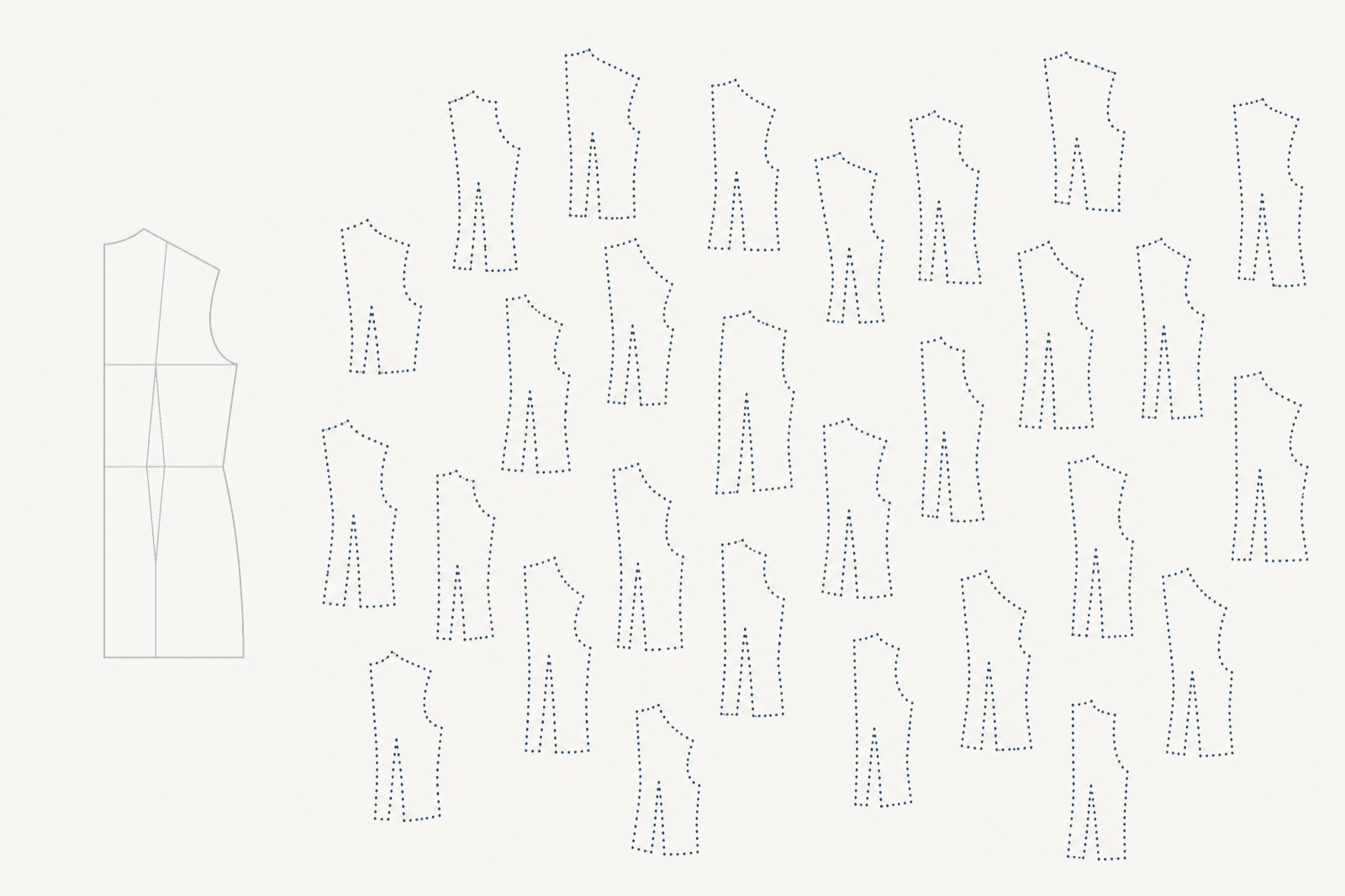
A, B and C differ in one measurable way: how much width is released at the hip relative to the standard block. D differs in another: the shoulder. All four are drawn here on one coordinate system.
- Standard block
- Straight
- Curved
- Wide-Curve
| Line | Block | Hip released | Criterion | Garments |
|---|---|---|---|---|
| A | Straight Block | 0 cm | Hip-to-waist difference up to 30 cm | 8 |
| B | Curved Block | +10 cm | Hip-to-waist difference 30–40 cm | 8 |
| C | Wide-Curve Block | +18 cm | Hip-to-waist difference above 40 cm | 8 |
| D | Shoulder Block | — | Sorted by shoulder width, not by hip-to-waist difference | 8 |
The criterion is your own hip measurement minus your own waist measurement. The standard block's is 26 cm. If yours is within 4 cm of that, Block A is drafted for it; 4–14 cm above it, Block B; more than 14 cm above, Block C.
Between 4 and 8 cm the two nearest blocks are close enough that we give you both rather than picking one for you.
Full measurements, every block, every size
These are body measurements — what each block is drafted to fit. Add the ease listed on a product page to get that garment's finished measurements.
A · Straight Block
| Size | Bust | Waist | Hip | Hip − waist | Shoulder | Sleeve |
|---|---|---|---|---|---|---|
| 34 | 80 | 62 | 88 | 26 | 37.2 | 58 |
| 36 | 84 | 66 | 92 | 26 | 38.1 | 59 |
| 38 | 88 | 70 | 96 | 26 | 39 | 60 |
| 40 | 92 | 74 | 100 | 26 | 39.9 | 61 |
| 42 | 96 | 78 | 104 | 26 | 40.8 | 62 |
| 44 | 100 | 82 | 108 | 26 | 41.7 | 63 |
| 46 | 104 | 86 | 112 | 26 | 42.6 | 64 |
B · Curved Block
| Size | Bust | Waist | Hip | Hip − waist | Shoulder | Sleeve |
|---|---|---|---|---|---|---|
| 34 | 80 | 62 | 98 | 36 | 37.2 | 58 |
| 36 | 84 | 66 | 102 | 36 | 38.1 | 59 |
| 38 | 88 | 70 | 106 | 36 | 39 | 60 |
| 40 | 92 | 74 | 110 | 36 | 39.9 | 61 |
| 42 | 96 | 78 | 114 | 36 | 40.8 | 62 |
| 44 | 100 | 82 | 118 | 36 | 41.7 | 63 |
| 46 | 104 | 86 | 122 | 36 | 42.6 | 64 |
C · Wide-Curve Block
| Size | Bust | Waist | Hip | Hip − waist | Shoulder | Sleeve |
|---|---|---|---|---|---|---|
| 34 | 80 | 62 | 106 | 44 | 37.2 | 58 |
| 36 | 84 | 66 | 110 | 44 | 38.1 | 59 |
| 38 | 88 | 70 | 114 | 44 | 39 | 60 |
| 40 | 92 | 74 | 118 | 44 | 39.9 | 61 |
| 42 | 96 | 78 | 122 | 44 | 40.8 | 62 |
| 44 | 100 | 82 | 126 | 44 | 41.7 | 63 |
| 46 | 104 | 86 | 130 | 44 | 42.6 | 64 |
D · Shoulder Block
| Size | Bust | Waist | Hip | Hip − waist | Shoulder | Sleeve |
|---|---|---|---|---|---|---|
| 34 | 80 | 62 | 88 | 26 | 36 / 39 / 42 | 58 |
| 36 | 84 | 66 | 92 | 26 | 36 / 39 / 42 | 59 |
| 38 | 88 | 70 | 96 | 26 | 36 / 39 / 42 | 60 |
| 40 | 92 | 74 | 100 | 26 | 36 / 39 / 42 | 61 |
| 42 | 96 | 78 | 104 | 26 | 36 / 39 / 42 | 62 |
| 44 | 100 | 82 | 108 | 26 | 36 / 39 / 42 | 63 |
| 46 | 104 | 86 | 112 | 26 | 36 / 39 / 42 | 64 |
Ease and tolerance
Ease is the finished measurement minus the body measurement. A shirt with 10 cm of ease at the bust, cut for a 88 cm bust, measures 98 cm around the chest when laid flat and doubled.
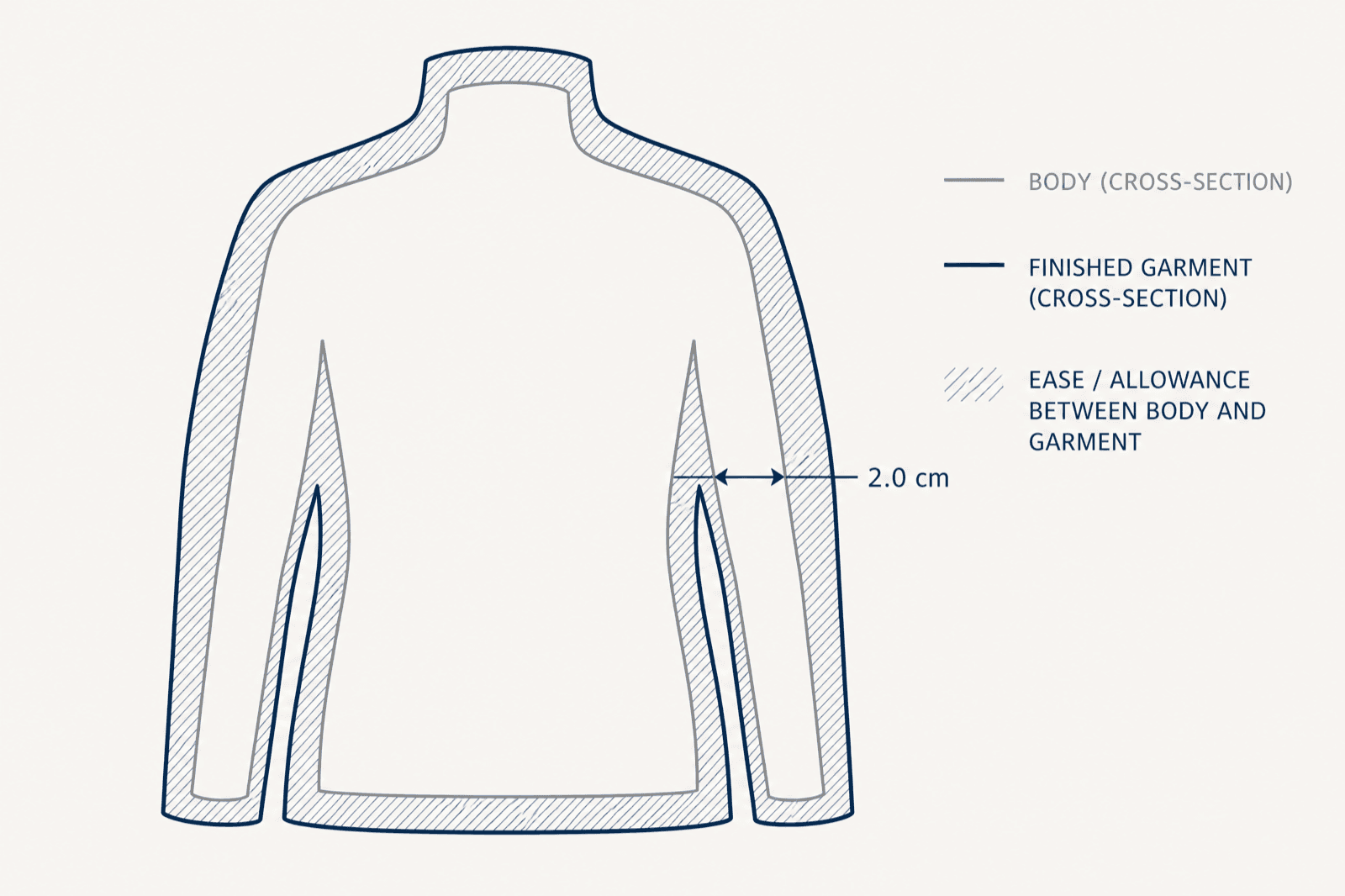
Tolerance is how far an actual garment may sit from its published figure. Ours is ±1 cm on every measurement of every garment.
Because we publish the finished measurements, a garment that misses them can be checked with a tape measure. Outside ±1 cm, that is a fault under the Swedish Consumer Sales Act, not wear — how to report it.
Stretch is listed as a percentage wherever the cloth contains elastane. It is measured relaxed. A 12 % stretch garment is not a garment that fits 12 % more people — it is a garment whose 92 cm hip will reach about 103 cm under tension, and sit closer to the body the whole time.
The shoulder bands
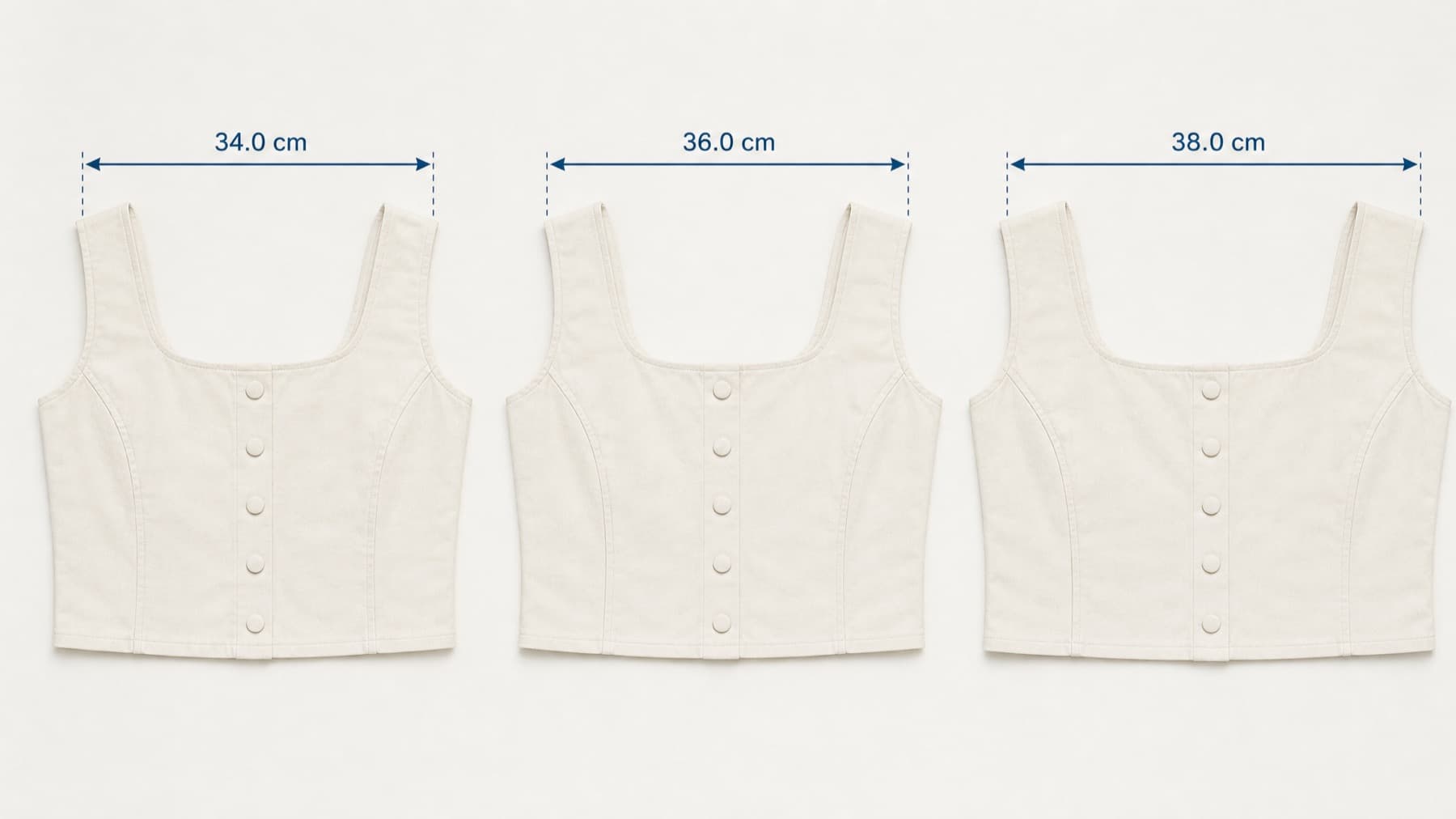
On lines A, B, C, E and F the shoulder grades with the size, by 0.9 cm a step. On Block D it does not: the body of the garment stays put and the shoulder is offered at 36, 39, 42 cm.
Shoulder width is usually locked to the size. Here it isn't.
All three bands cost the same. Charging more for a wider shoulder would be charging for a body measurement, which we won't do — the same applies across blocks.
Fixed lengths
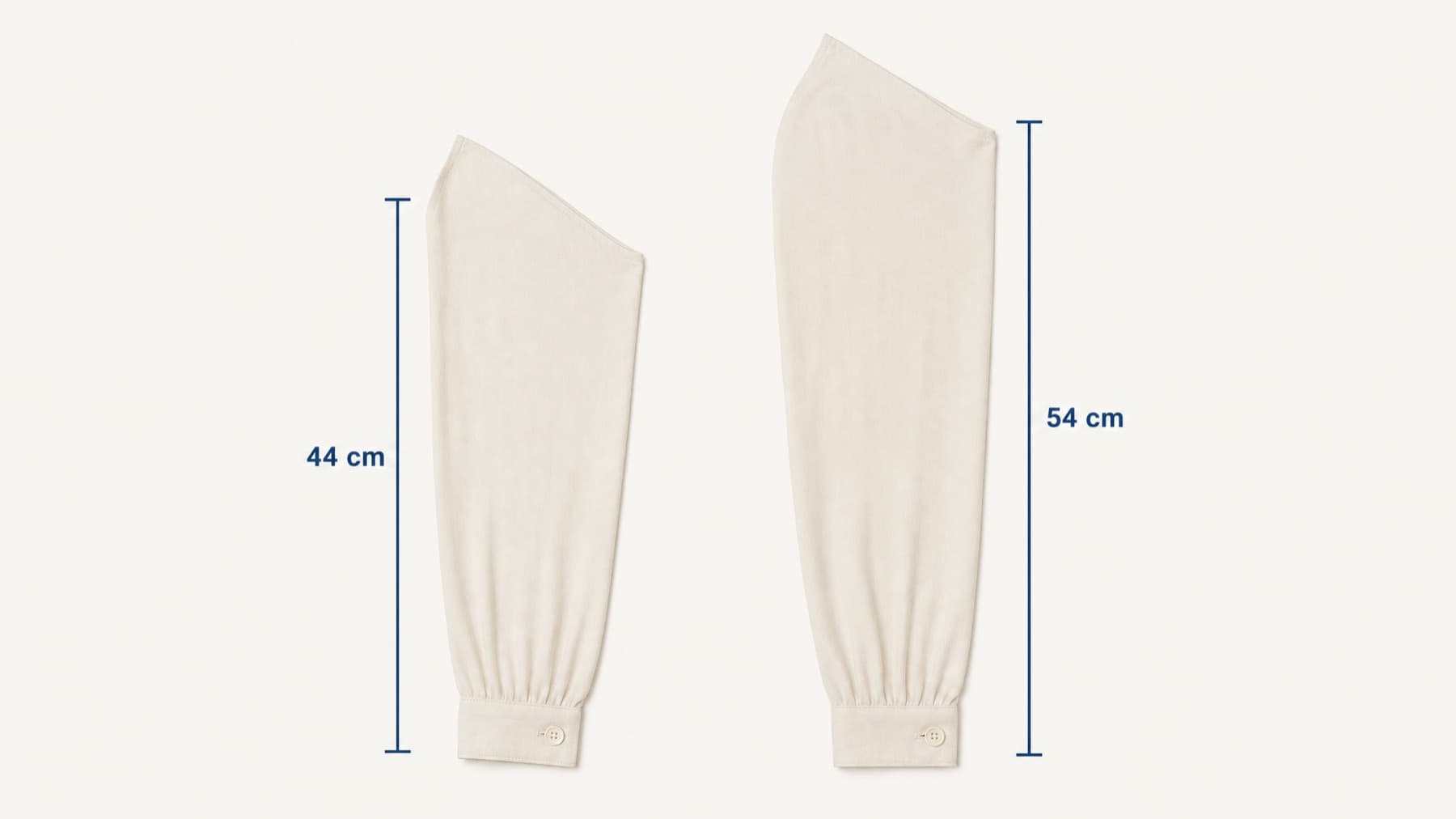
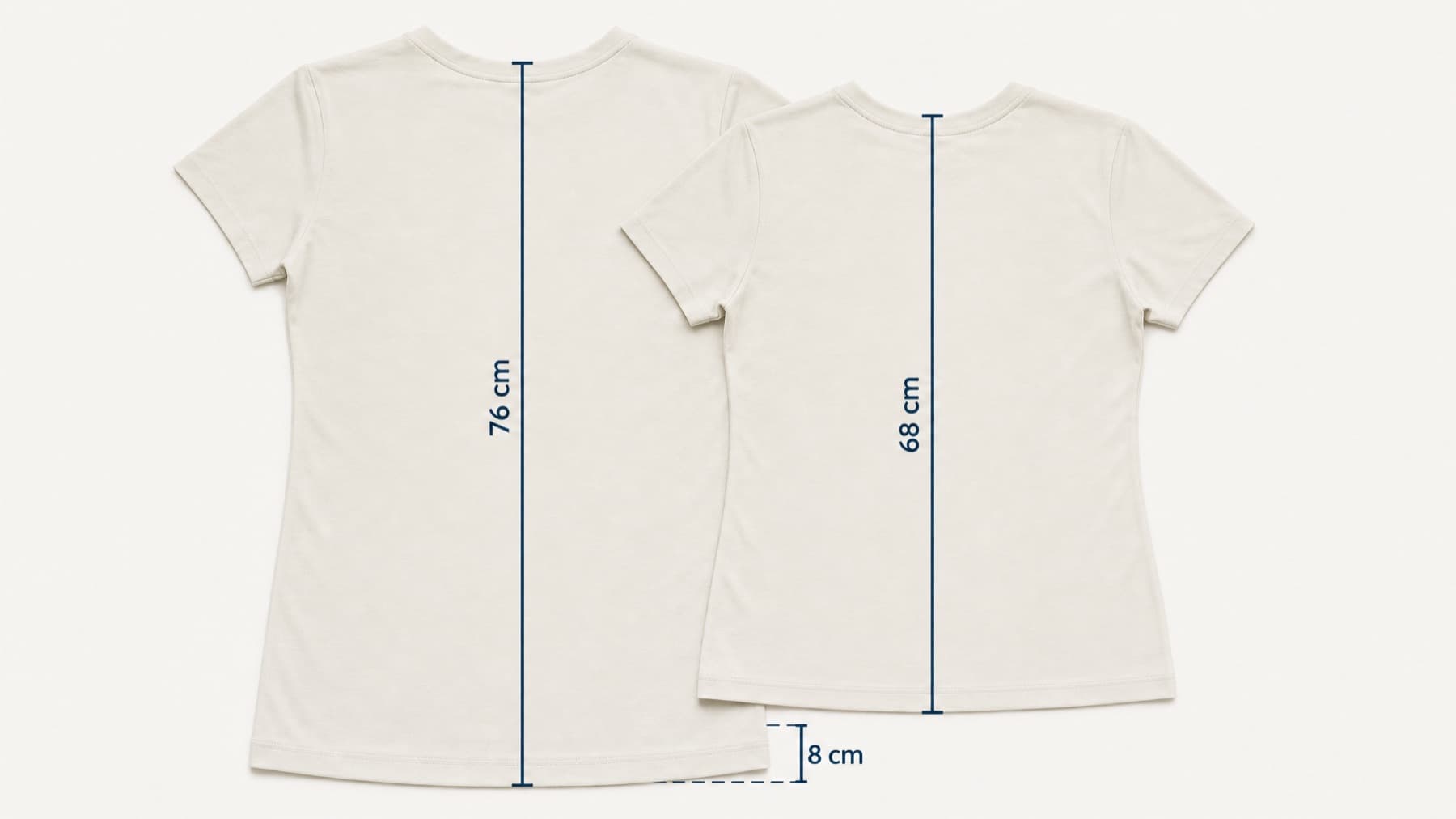
Line E takes the Straight Block and fixes one length axis instead of grading it: sleeves at 58 or 65 cm, body length 5 cm shorter or longer, inseam 6 cm shorter or longer. The rest of the geometry is unchanged, so a Line E garment can be compared directly against its Line A equivalent.
Sizing top and bottom separately
Your bust decides the top half. Your hip decides the bottom half. Those are two independent measurements, and nothing in pattern drafting makes them land on the same size.
Every set on Line F is sized in two parts. F-04 goes further: its top is drafted from Block B and its bottom from Block C, so the two halves do not even share a block.
Your top and bottom don't have to come from the same block. Most people's don't.
Block Compare gives both numbers at once, and keeps them visible while you browse.
Measuring yourself
- Measure over light clothing, not over a coat and not against bare skin.
- Keep the tape level all the way round. A tape that rides up gives a smaller number than the one a garment is cut to.
- Don't pull the tape tight. Snug, not compressed.
- The shoulder is measured across the back, from one shoulder point to the other, in a straight line rather than following the curve.
- If you can, have someone else take the back measurements. Reaching around changes your posture and the number with it.
What we don't cover
Sizes 34 to 46, shoulders 36 to 42 cm, and hip-to-waist differences from roughly 22 to 48 cm. Outside that, we don't have a block, and Block Compare will say so rather than pointing you at the nearest thing.
Your measurements are outside the range our blocks cover. We'd rather tell you that than sell you something that won't fit.
We also don't suggest buying a size up and having it altered. What that costs and how well it works vary far too much for us to put it forward as advice.
If something you bought here didn't fit, the fit feedback form asks which measurement was off and by how much. That is how this page gets more accurate.