Blockline
Cart0

Womenswear drafted from four measurable blocks

Standard sizes come from one block.Your body probably isn't that block.

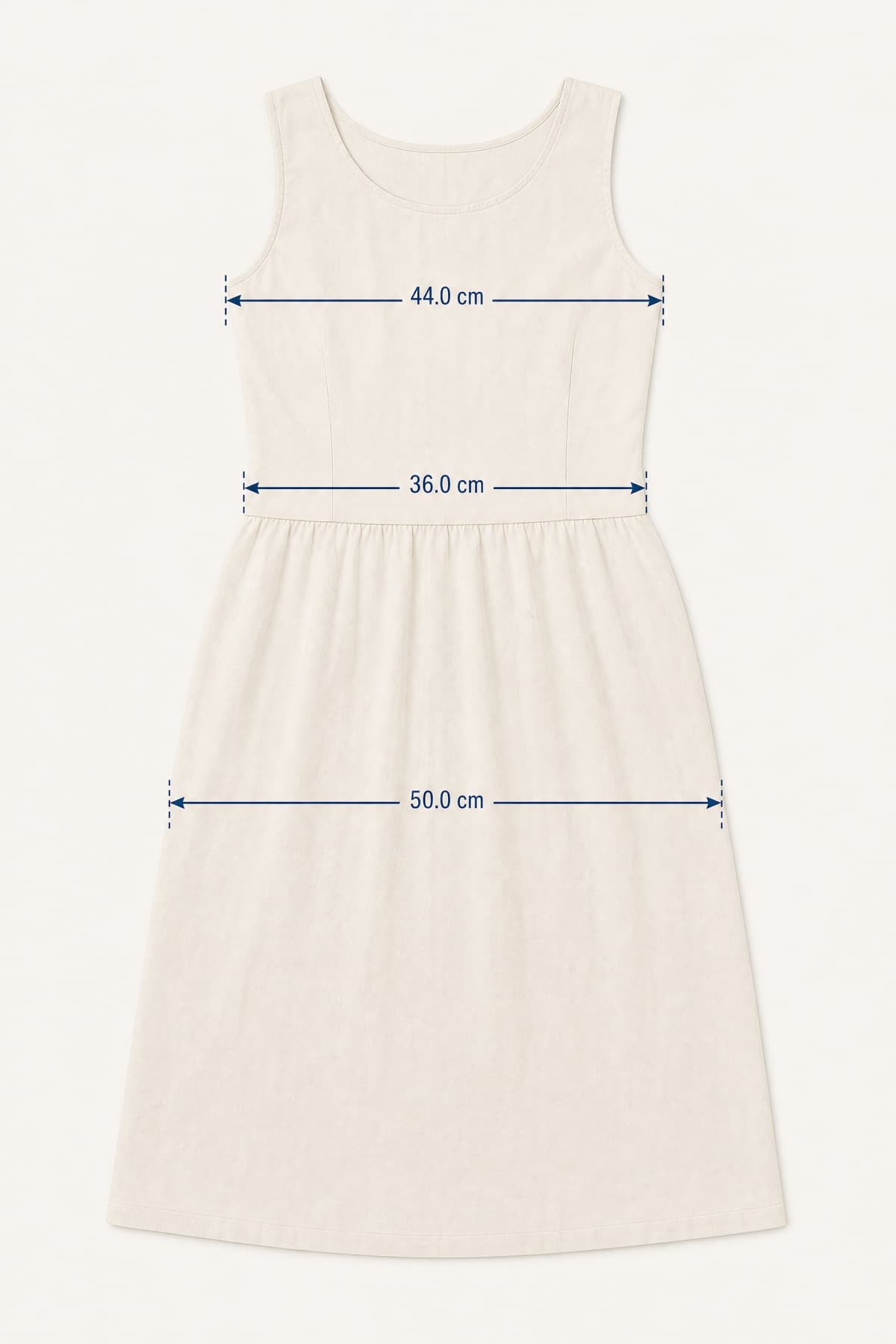
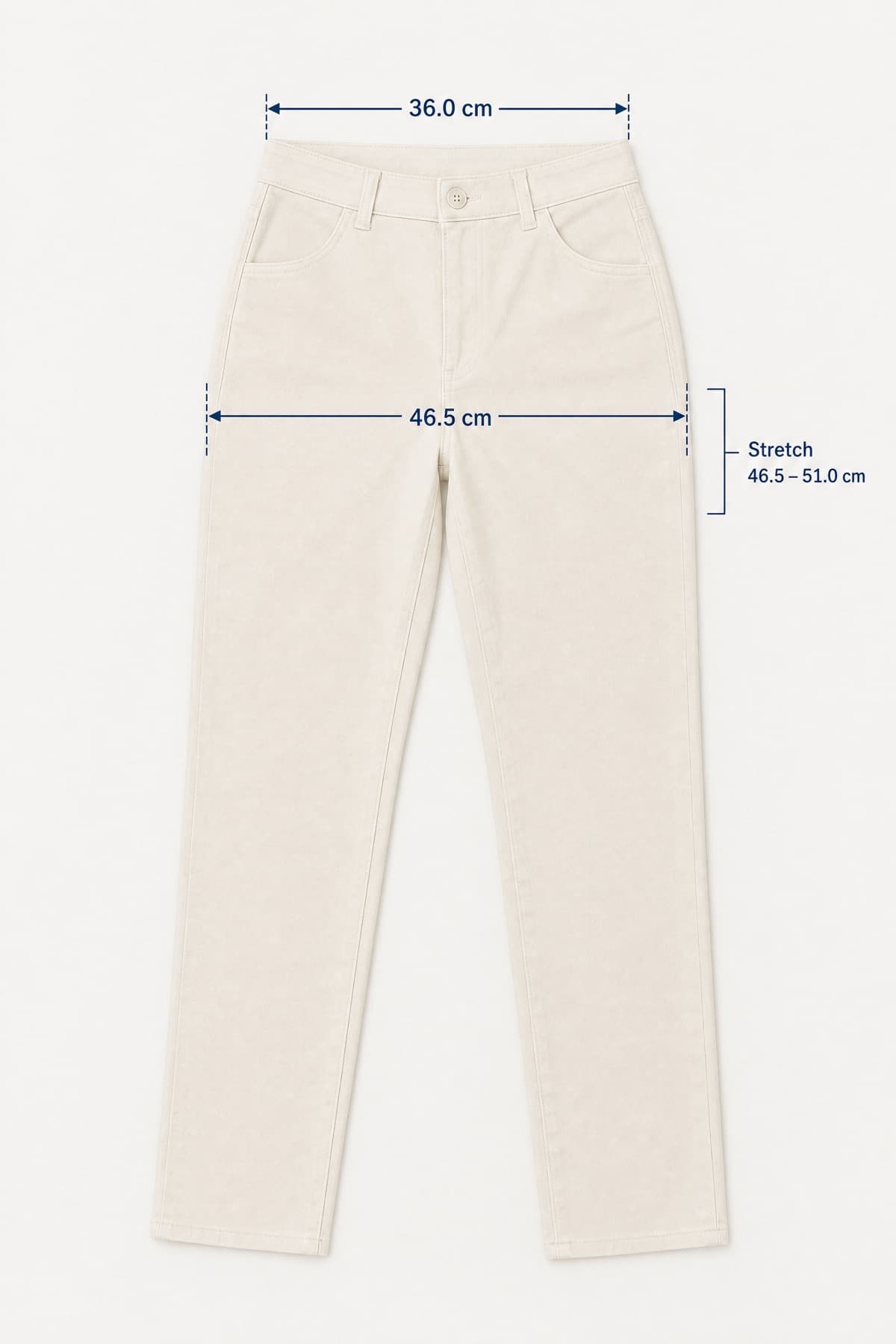
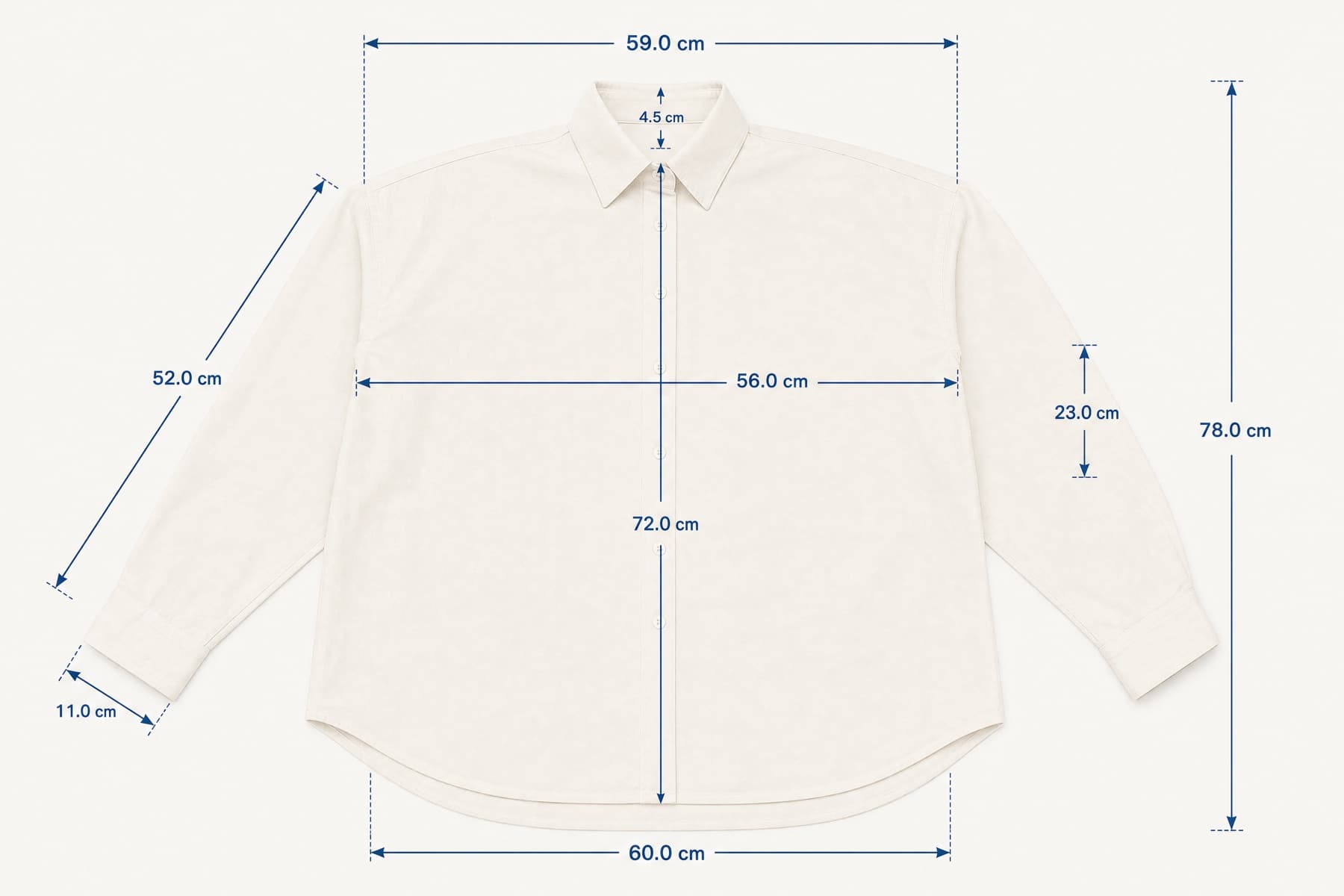
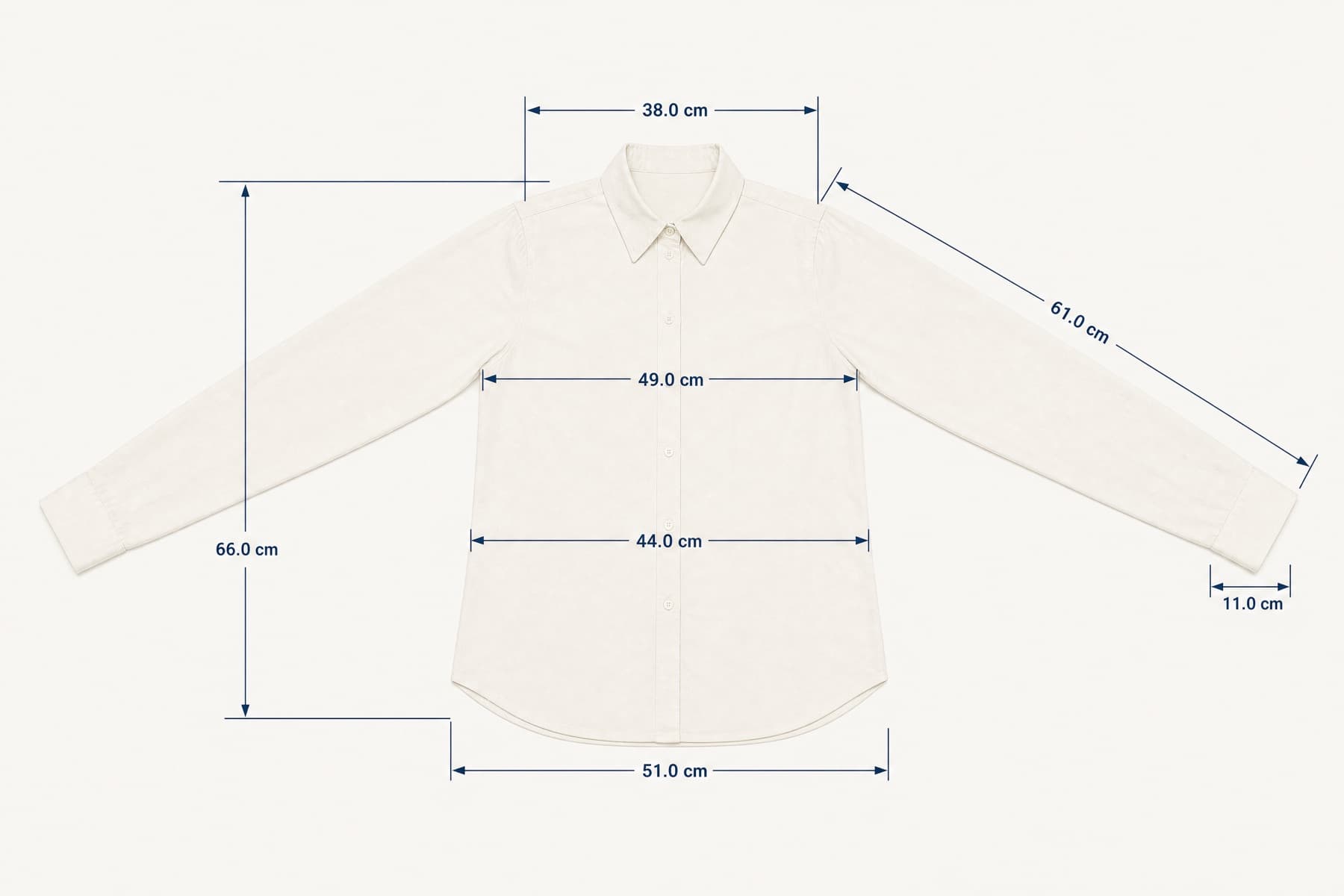
So this site tells you where the difference is. Every garment here carries its finished measurements, its ease and a ±1 cm tolerance — published, not on request. Fill in three numbers and the drawing below redraws itself.

The four blocks, one coordinate system

1 square = 5 cm

ShoulderBustWaistHip+10 cm+18 cm
  • Standard block
  • Straight
  • Curved
  • Wide-Curve
Your measurements, in centimetres

Fullest part, tape level

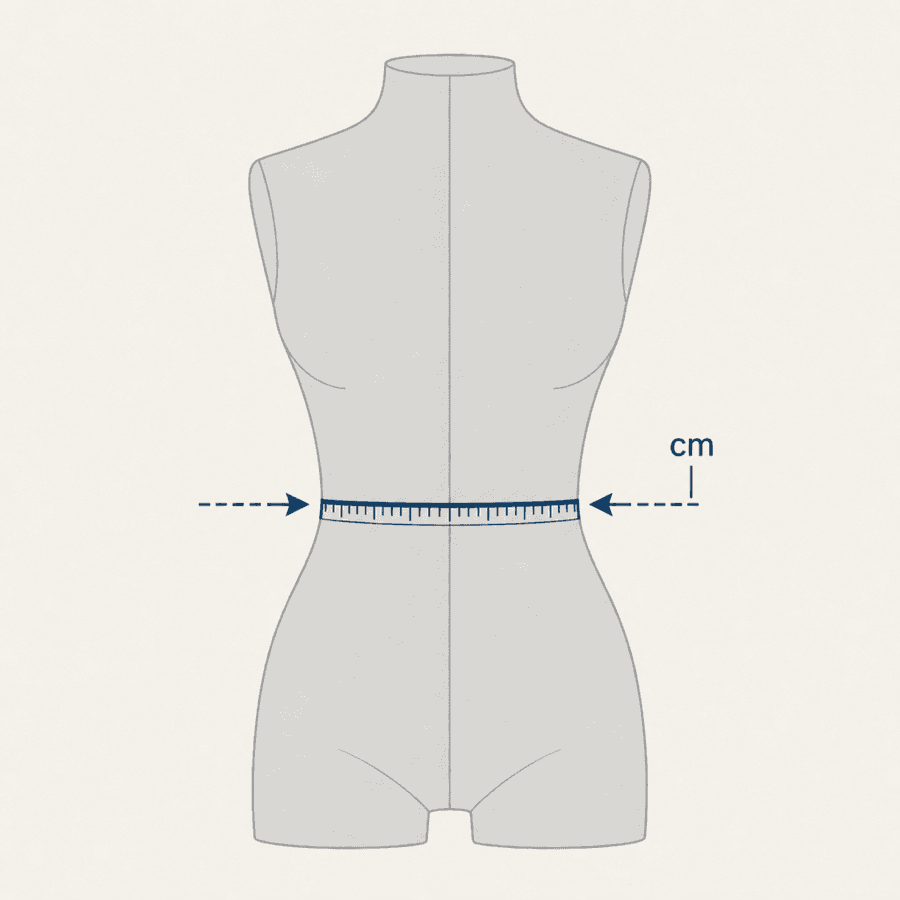
Narrowest part

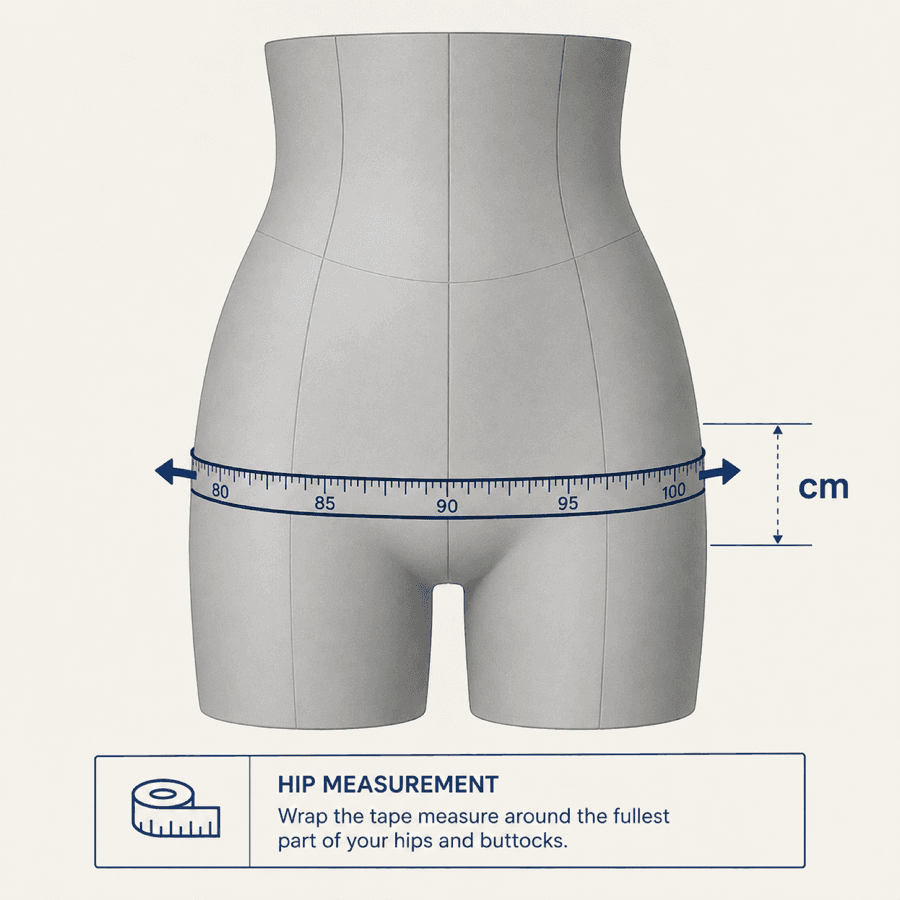
Fullest part

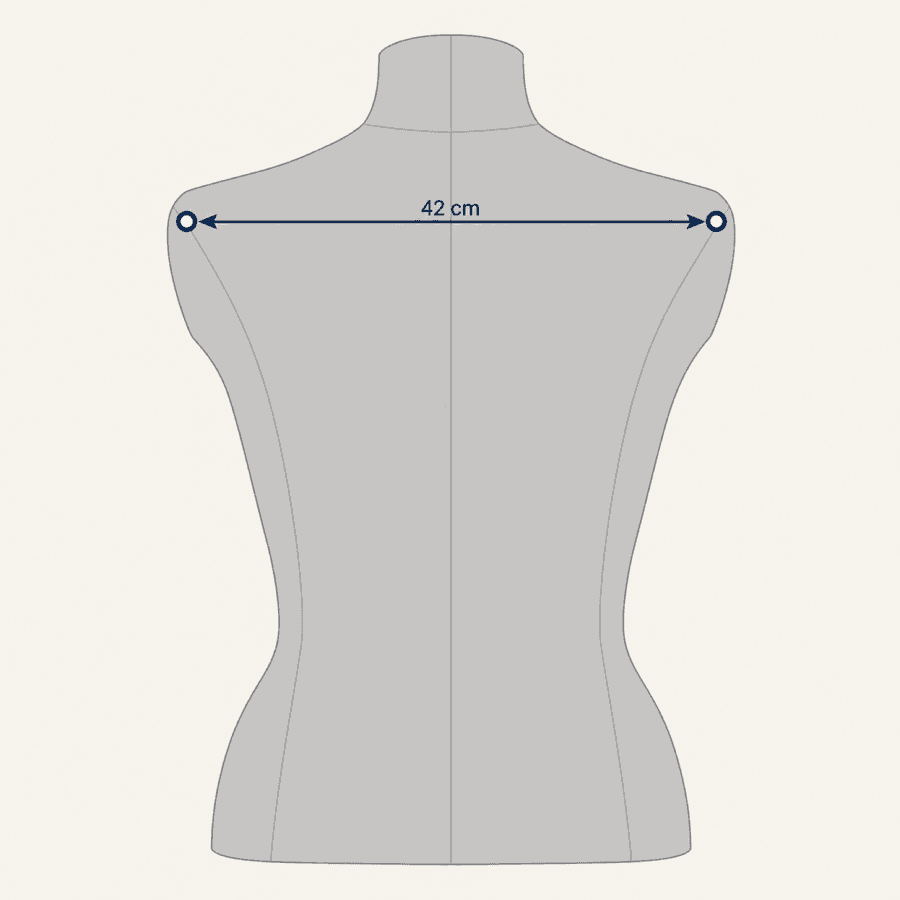
Across the back

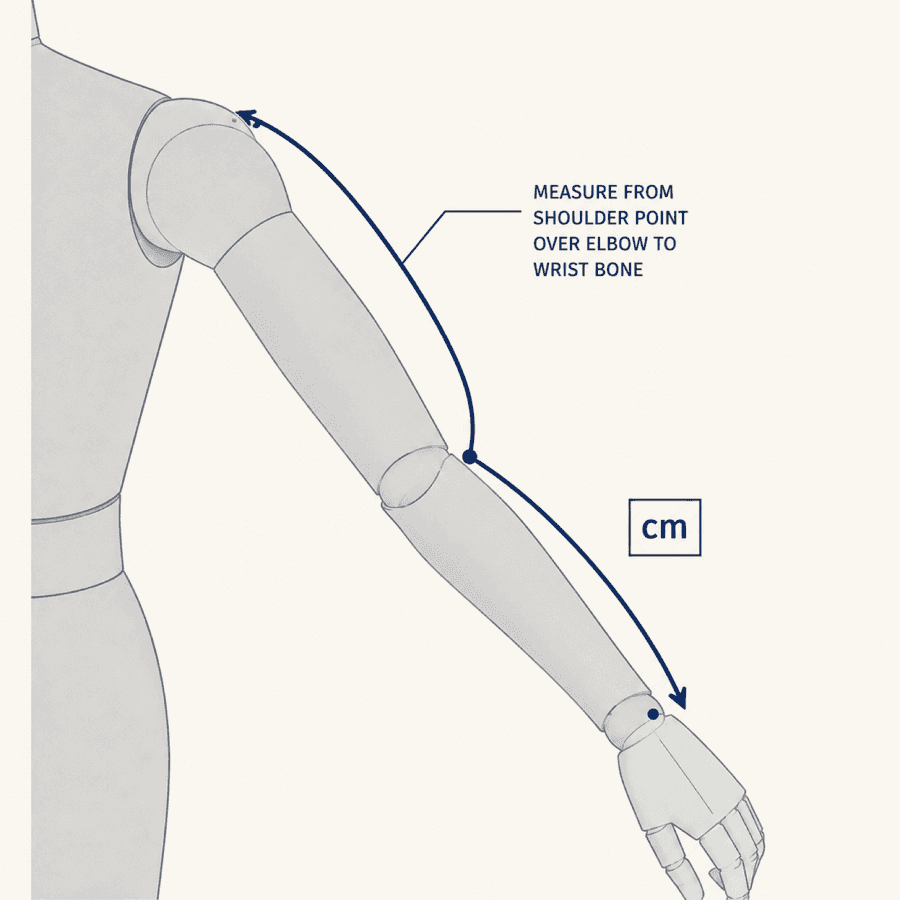
Shoulder to wrist

Nothing here is sent anywhere or stored. It stays in this browser tab and is gone when you close it. How we handle measurement data.

Your measurements against the standard block, with the difference in centimetres and what each row points to.
MeasurementYoursStandard blockDifferencePoints to
Bust—88——
Waist—70——
Hip—96——
Hip minus waist—26——
Shoulderoptional—39——
Sleeveoptional—60——

Your two sizes

TopWaiting for measurements
BottomWaiting for measurements

Standard sizes come from one block. Your body probably isn't that block. This site tells you where the difference is.

Four blocks, one coordinate system

The names are descriptions of geometry, not of people. A block is a set of numbers a pattern is cut from — the standard one measures 88 at the bust, 70 at the waist and 96 at the hip. Everything below is stated as a difference from those three figures.

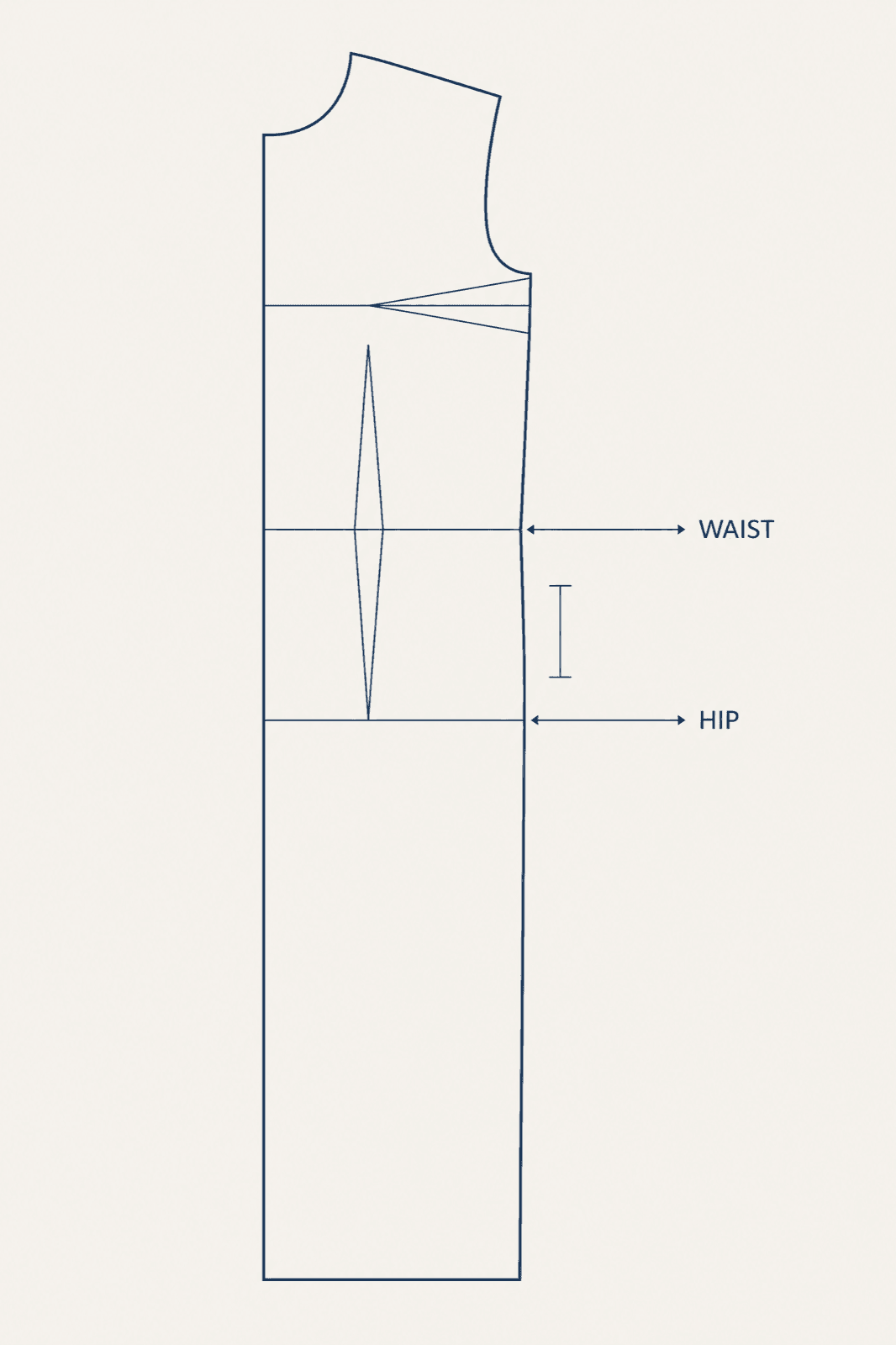
A

Straight Block

Hip-to-waist difference up to 30 cm
Technical line drawing of the Straight Block

Hip and waist sit within 4 cm of the standard block's 26 cm difference.

The side seam runs close to vertical. There is no extra width released at the hip beyond what the standard block already carries.

8 garments on this line
B

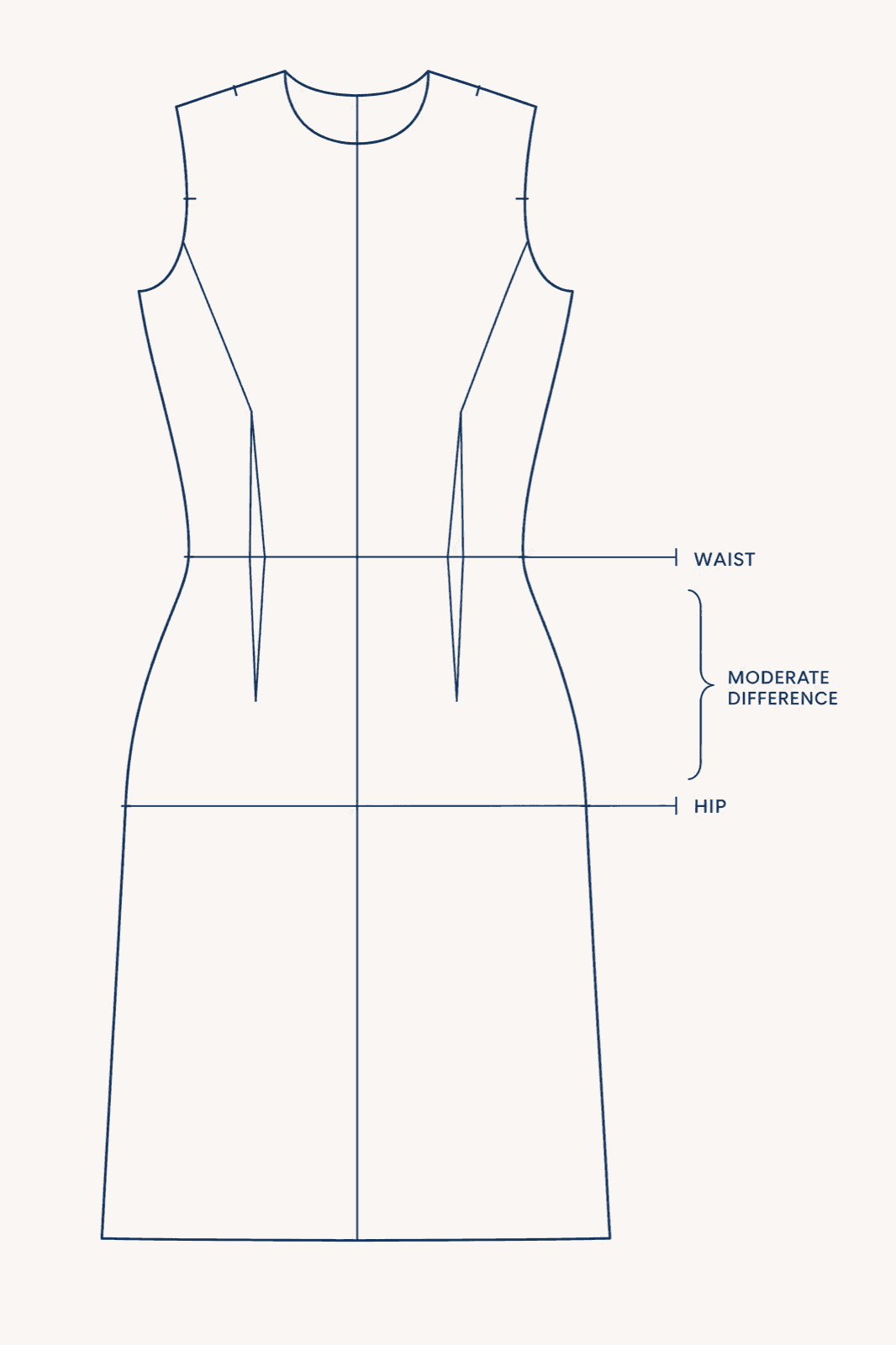
Curved Block

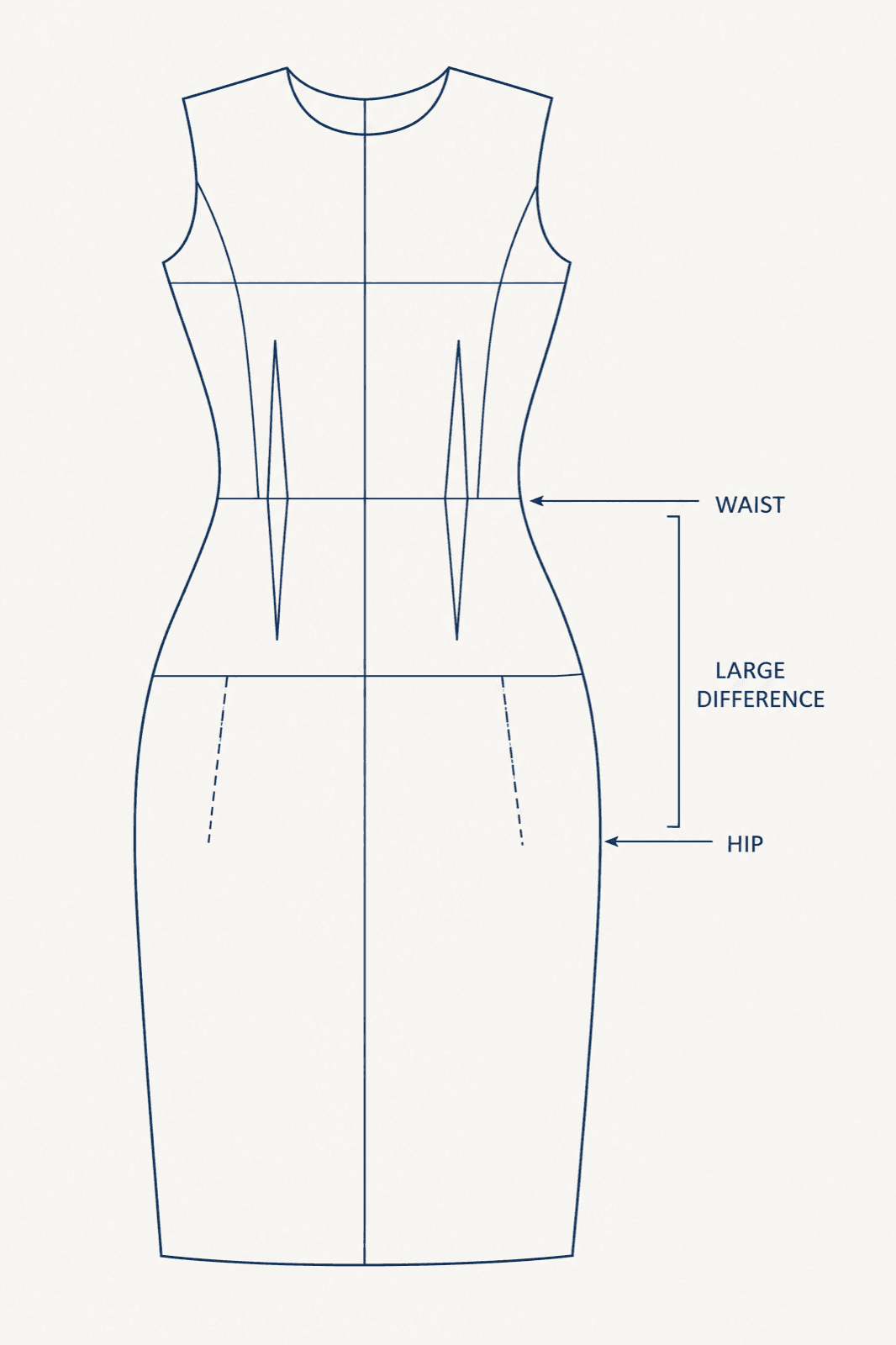
Hip-to-waist difference 30–40 cm

Technical line drawing of the Curved Block

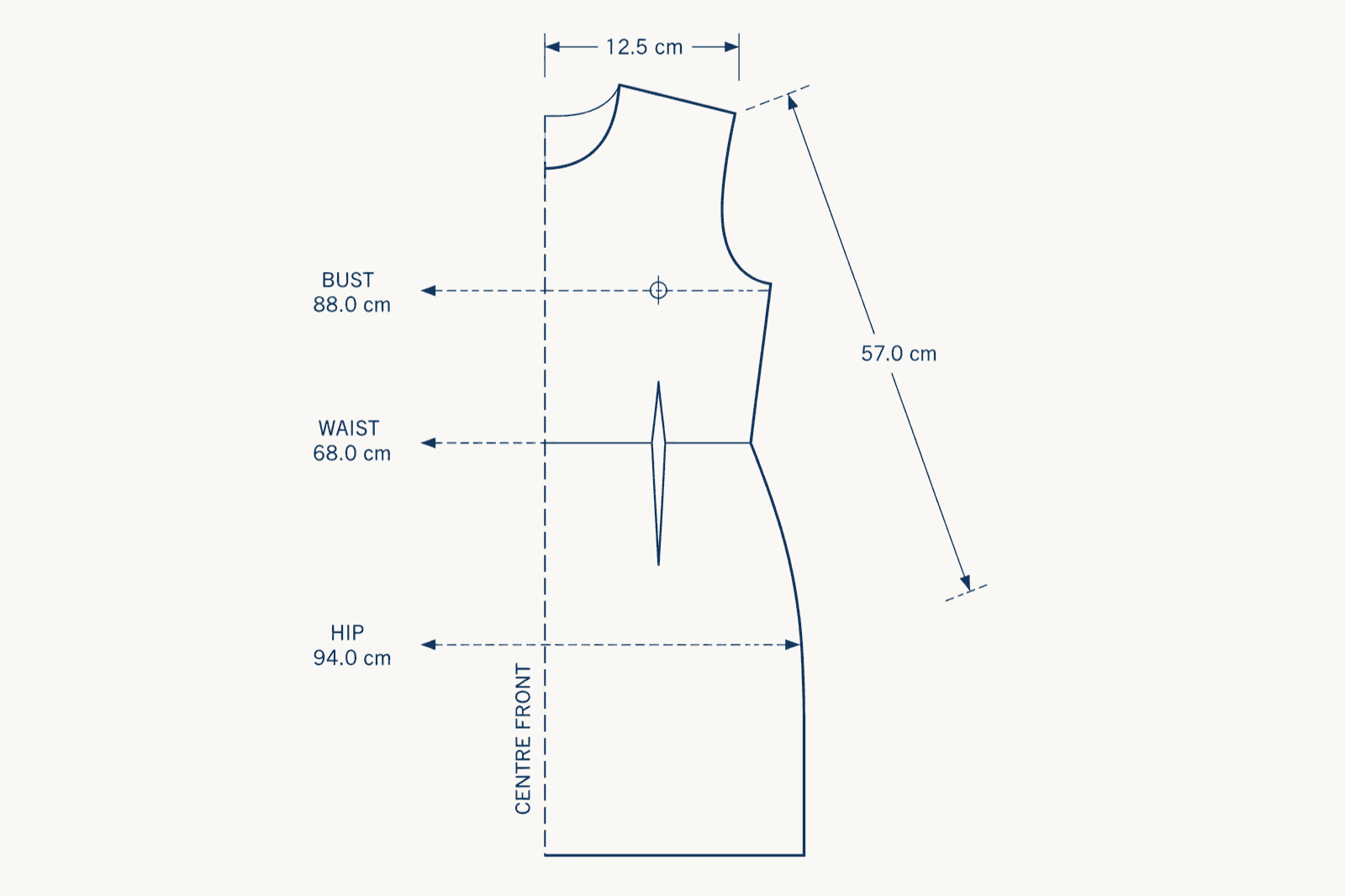
10 cm more room at the hip than the standard block, with the waist held.

The waist is suppressed with darts and the width is released again below it. The side seam curves.

8 garments on this line
C

Wide-Curve Block

Hip-to-waist difference above 40 cm

Technical line drawing of the Wide-Curve Block

18 cm more room at the hip than the standard block, with the waist held.

Two waist darts and a longer hip curve. The width released below the waist is roughly double the Curved Block's.

8 garments on this line
D

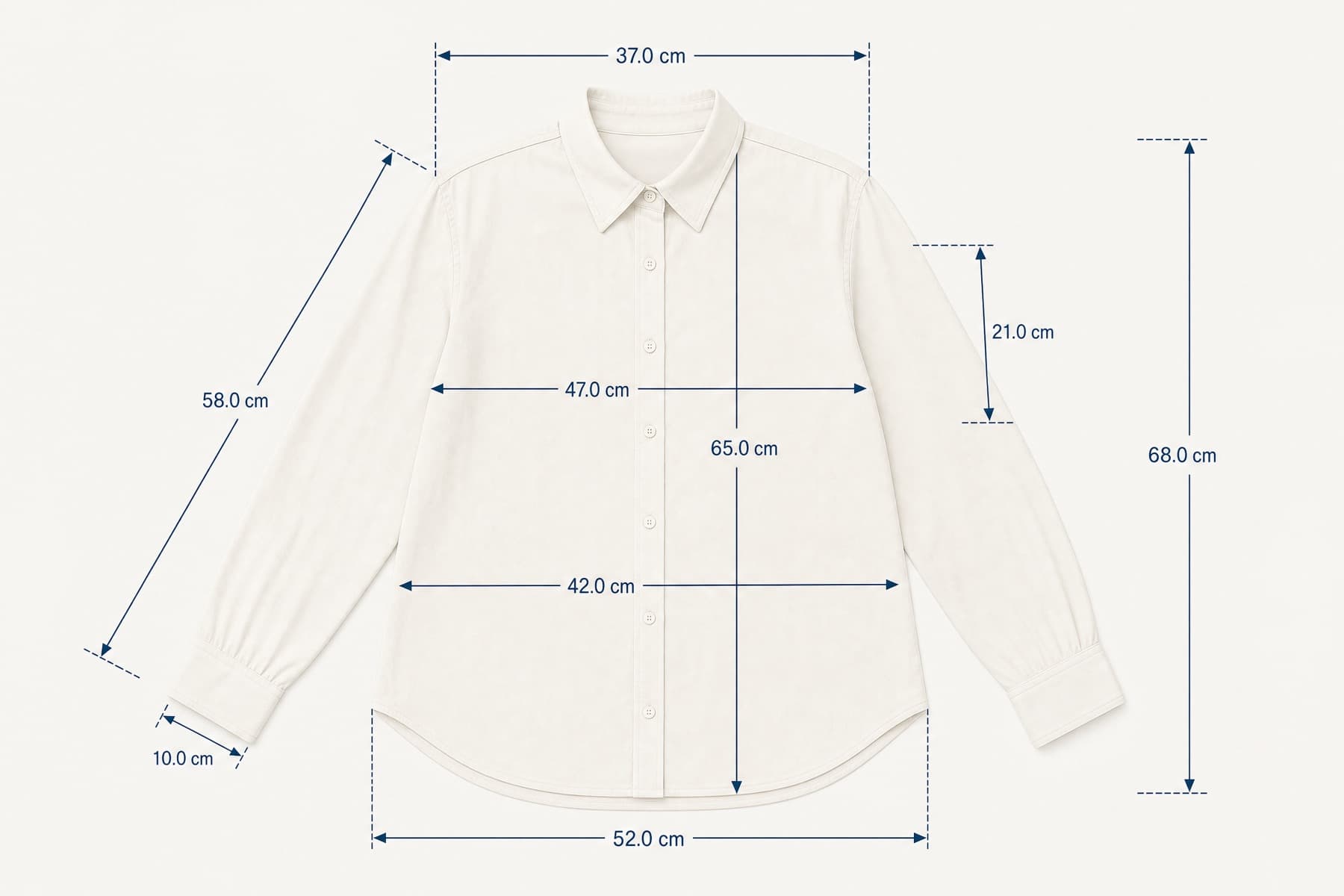
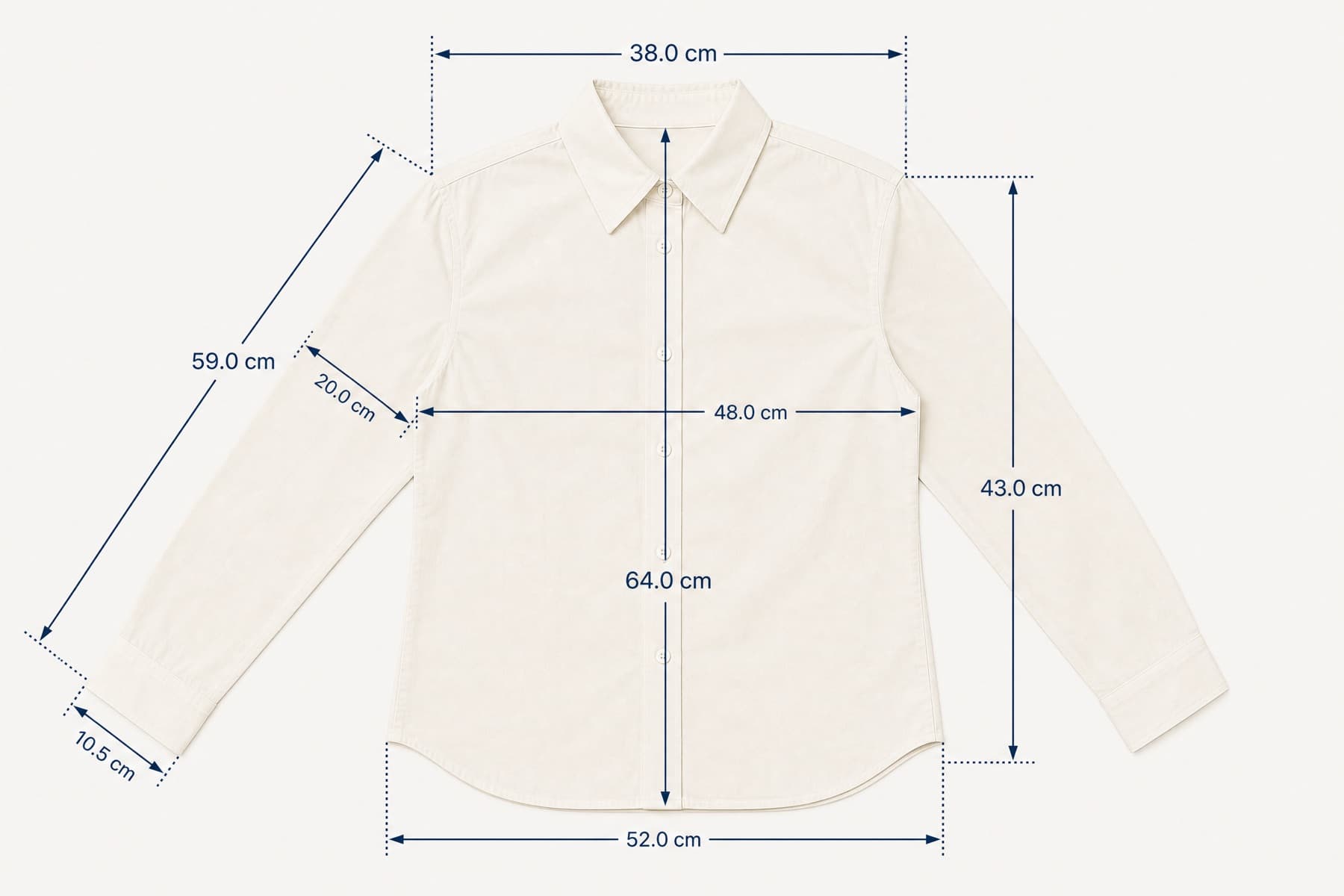
Shoulder Block

Sorted by shoulder width, not by hip-to-waist difference

Technical line drawing of the Shoulder Block

Shoulder width offered at 36, 39 and 42 cm on the same body.

Shoulder width is usually locked to the size. Here it isn't — the body of the garment stays the same and only the shoulder changes.

8 garments on this line
Ease

The gap between your body and the cloth

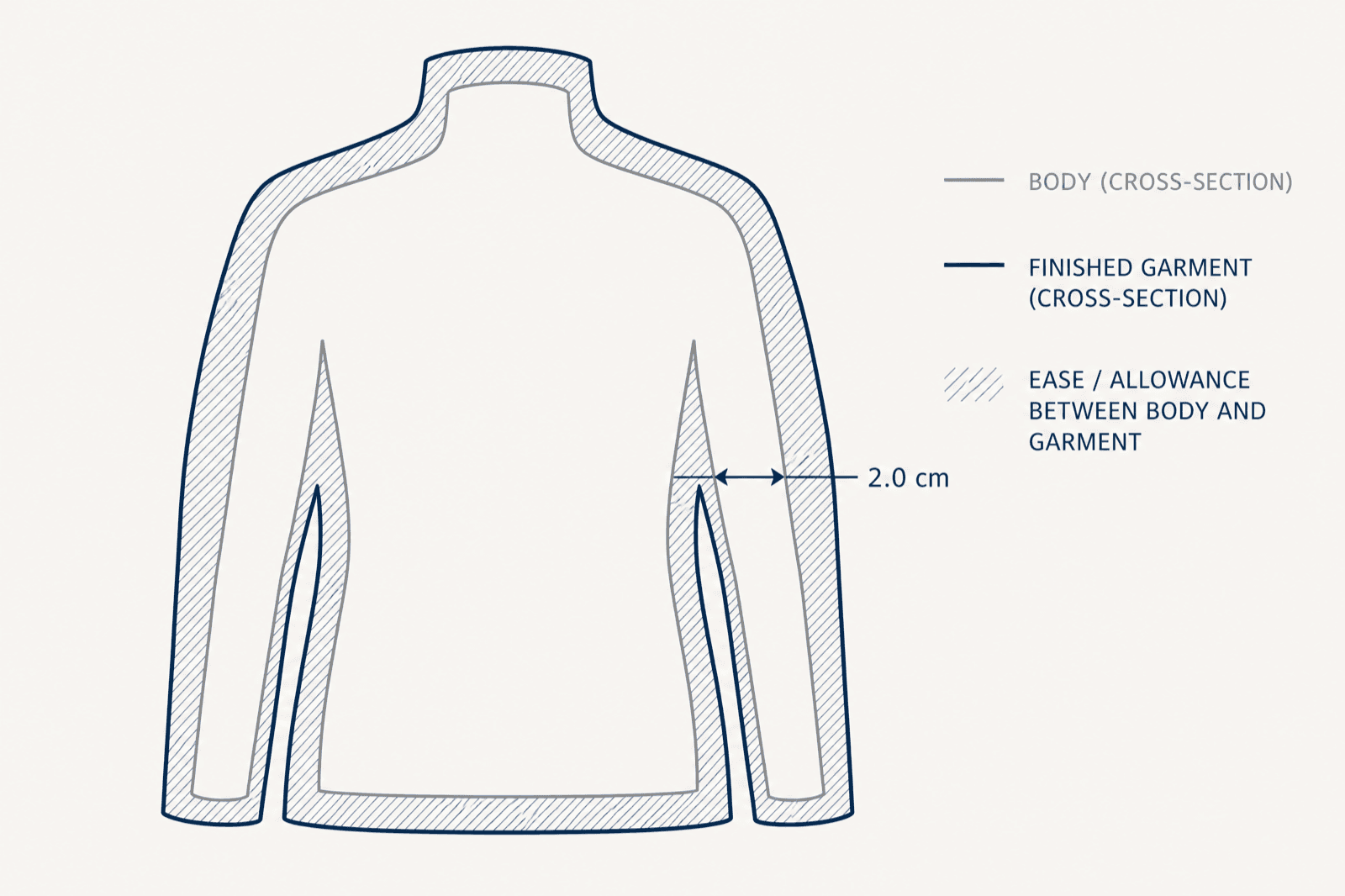
Ease is the finished measurement minus the body measurement. Most retailers publish body size charts and stop there, which tells you nothing about how the garment will sit. We publish both numbers and the gap between them, for every size of every garment.

Diagram showing the body outline inside the finished garment outline, with the gap between them hatched and labelled

Tolerance

Published numbers can be checked

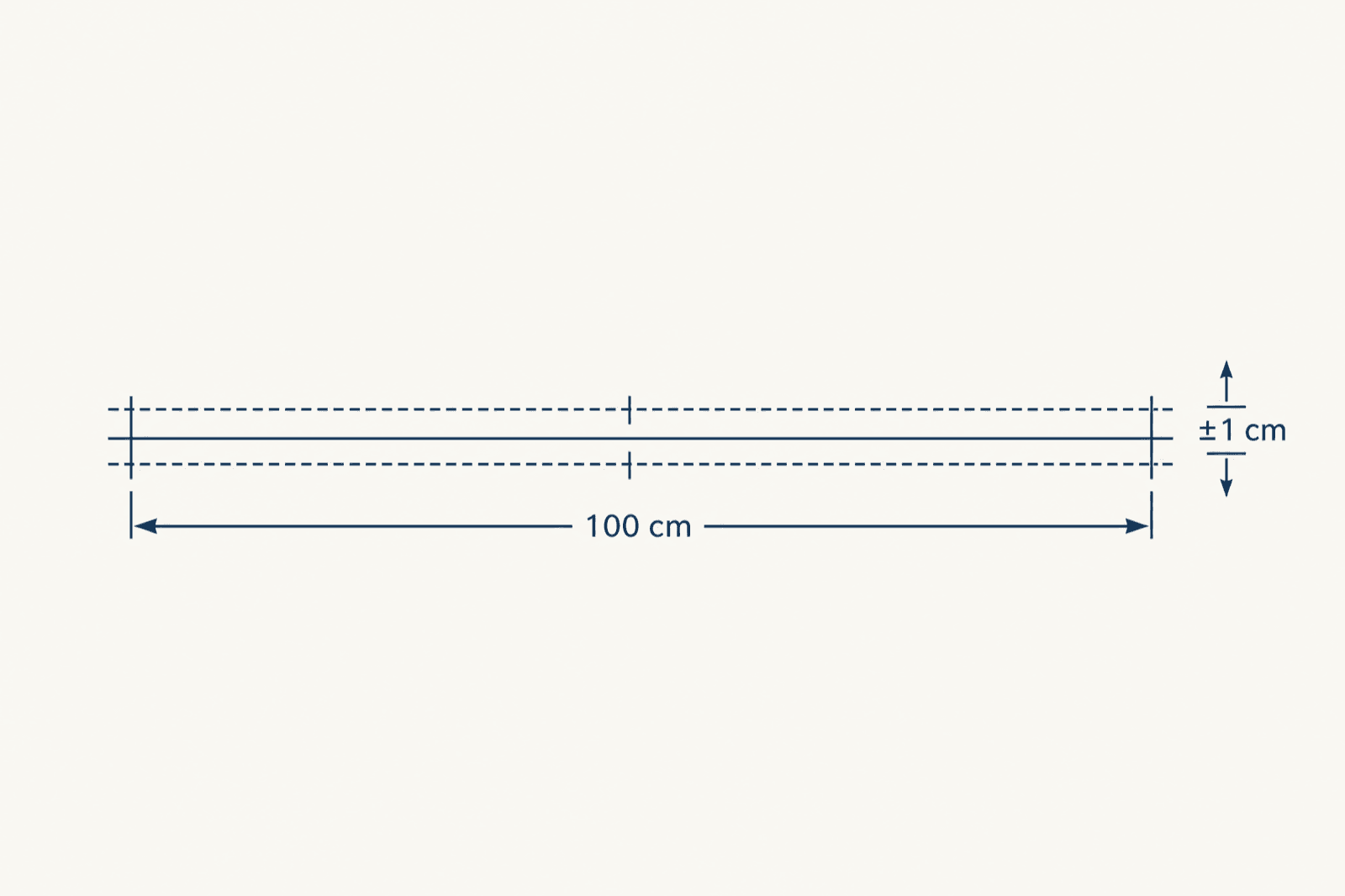
Finished measurements are held to ±1 cm. Outside that, the garment does not match what this page says, and that is a fault rather than wear.

Annotation diagram showing a nominal measurement line with a tolerance band of plus or minus one centimetre

Counts as wearNormal shrinkage within the stated range after repeated washing, and pilling.

Counts as a faultA finished measurement outside ±1 cm of the table on its page. Also split seams, failed zips and torn cloth.

How to report a fault

Cloth

A flat pattern and a hanging cloth are not the same thing

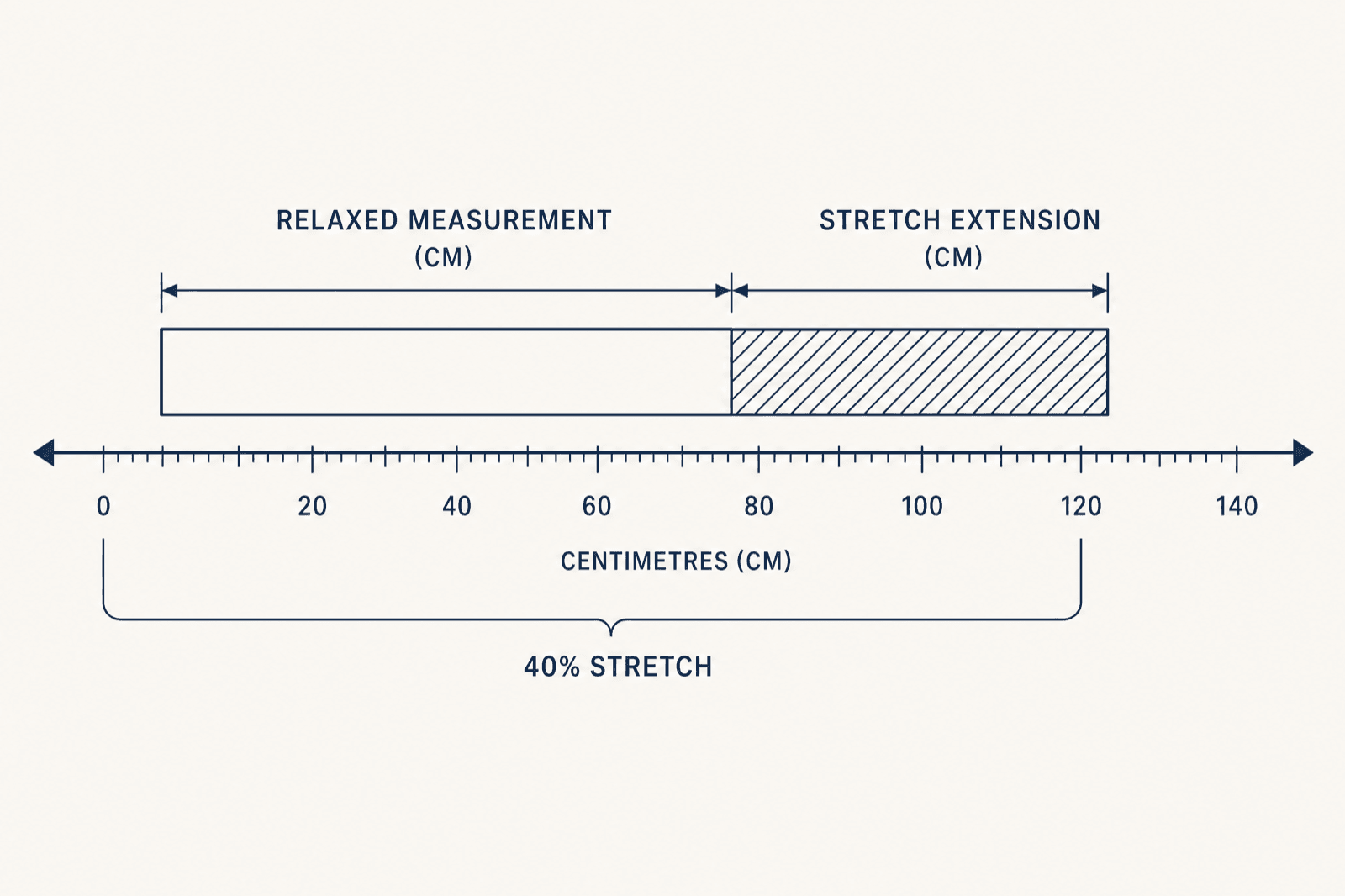
Two garments cut from identical patterns sit differently if the cloth differs. That is why every product page lists the legal fibre composition by weight, and why anything with elastane carries its stretch percentage — stretch changes the range a single size actually covers.

Range diagram showing a relaxed measurement and how far the cloth stretches beyond it

Stretch is measured relaxed, not held. A garment listed at 12 % stretch is not a garment that fits 12 % more people.

Shoulder width is usually locked to the size.Here it isn't.

It is the measurement that decides whether an upper garment sits or drags, and almost nobody offers it separately. Block D holds the body of the garment constant and changes only the shoulder: 36, 39 or 42 cm. All three cost the same.

Three bands is not every shoulder. If yours falls outside 36–42 cm, Block Compare says so rather than pointing you at the nearest one.

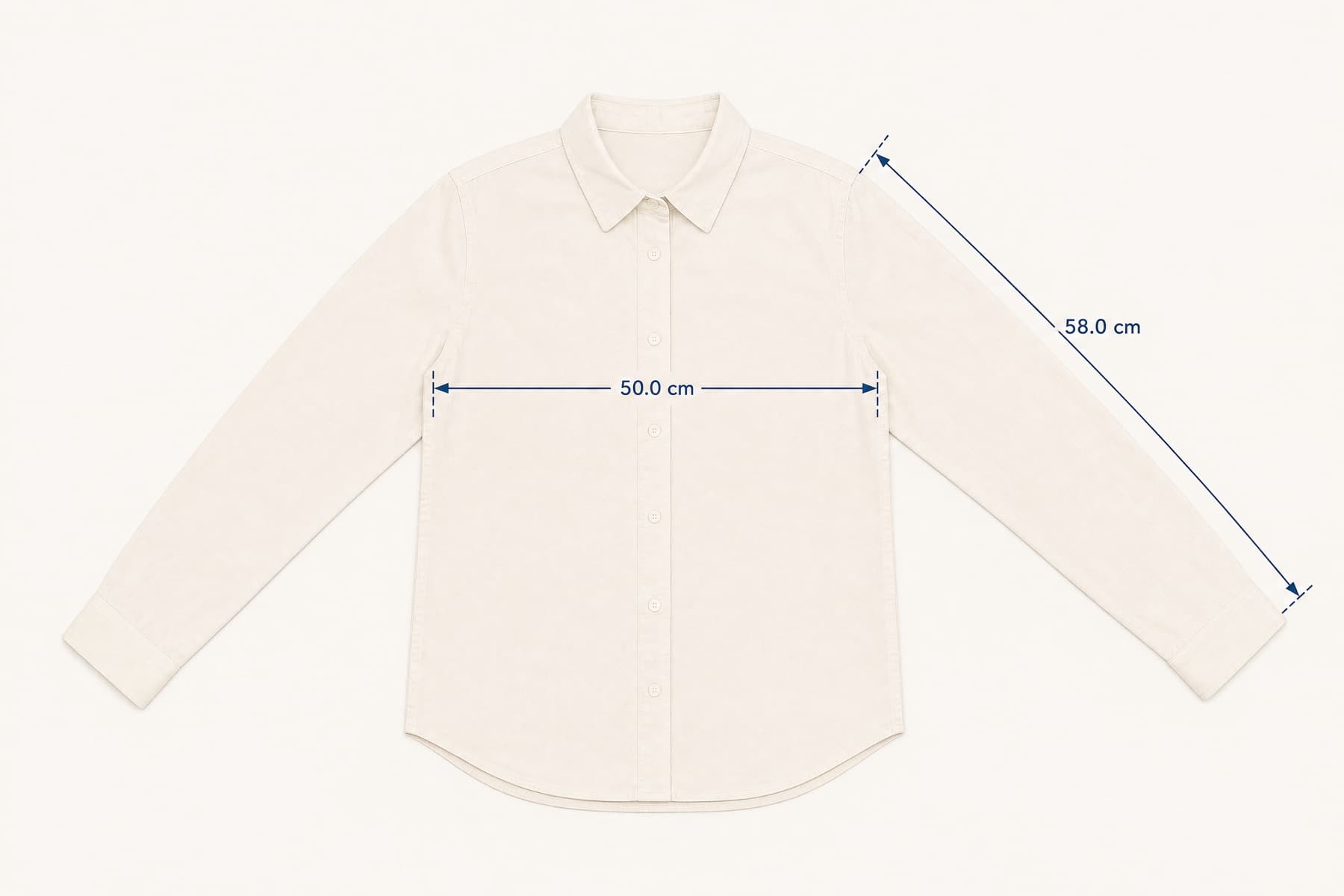
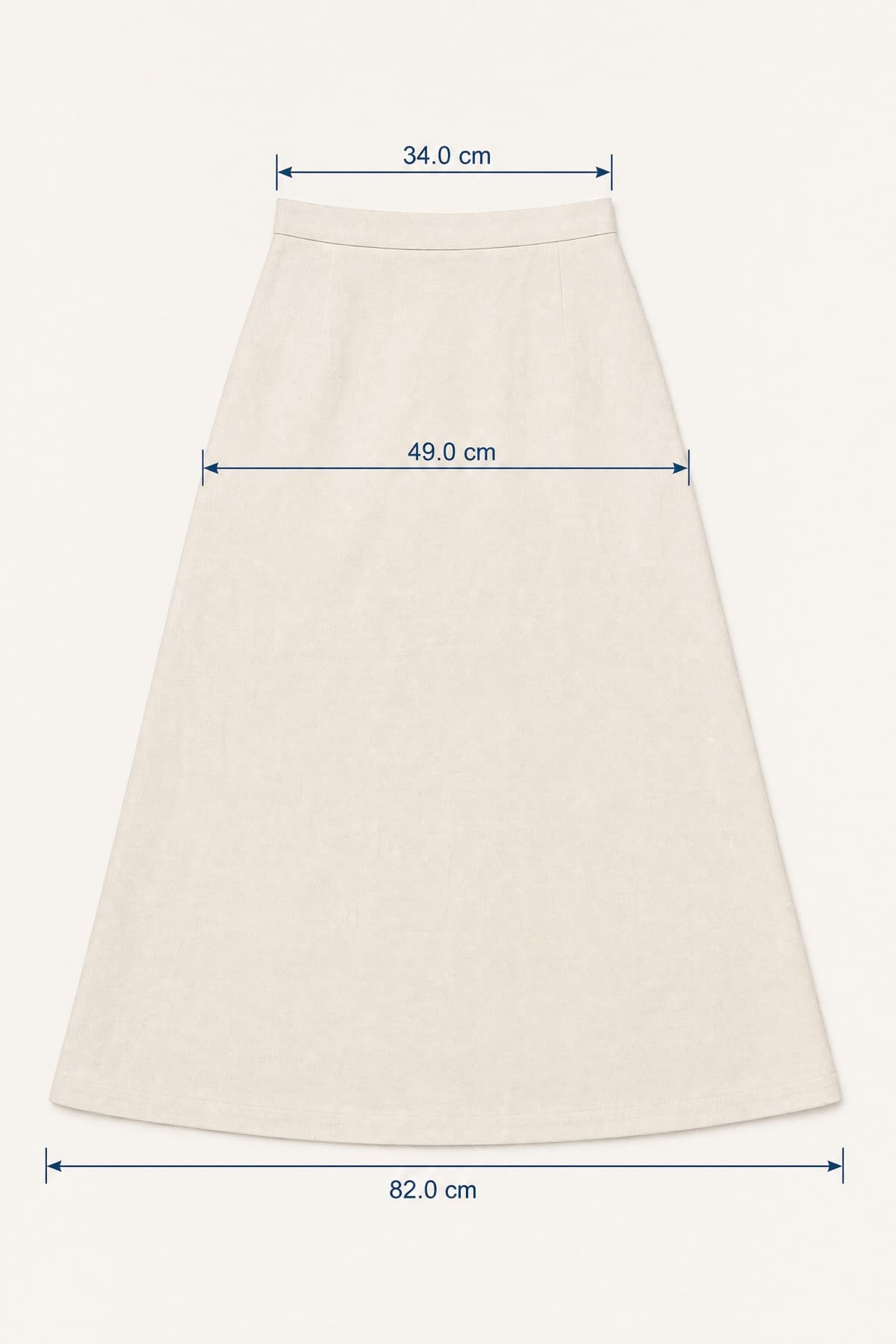
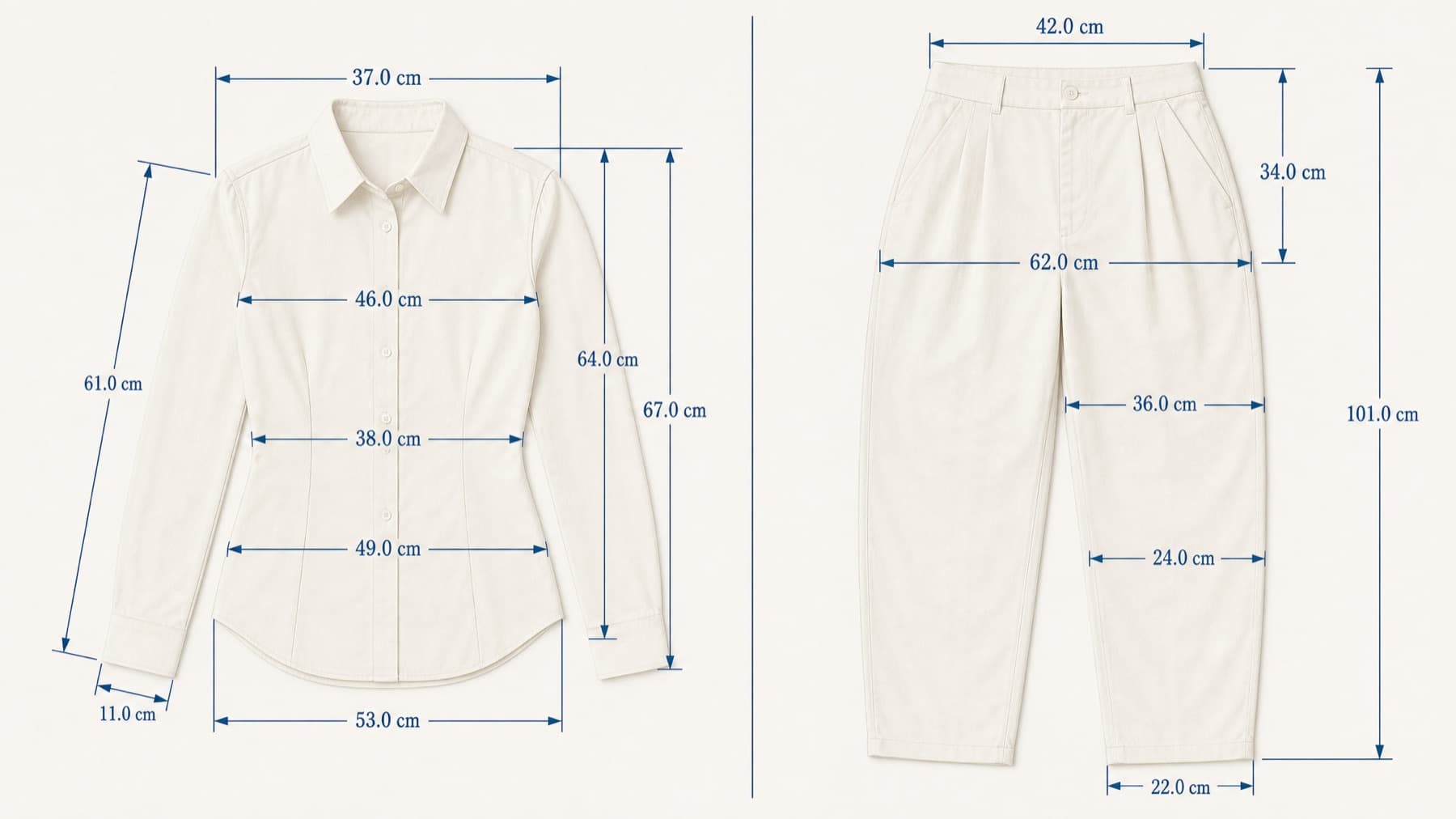
A shirt and a pair of trousers laid flat side by side, each drafted to different proportions and each carrying its own measurements

F-04 · Mixed Set

Your top and bottom don't have to come from the same block

Most people's don't. Sets are normally locked to one size across both halves, which is convenient for the warehouse and not for anyone else. This one takes the top from Block B and the bottom from Block C, and you pick a size for each.

138 USD

Less than the two garments bought separately.

See both halves

Seven measurements, taken on yourself

Three of them are enough to start. Take them over light clothing, keep the tape level, and don't pull it tight — a tape pulled tight gives you a number that no garment is cut to.

  • 01

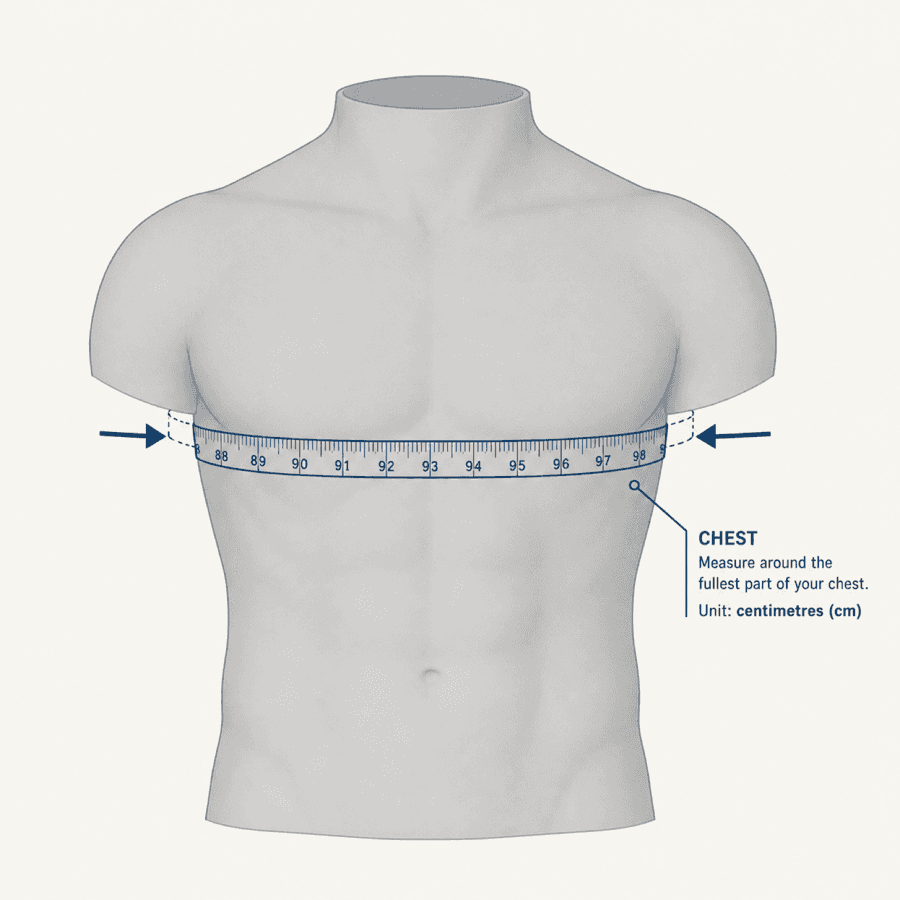
    Bust

    How to measure your bust

    Fullest part, tape level all the way round

  • 02

    Waist

    How to measure your waist

    Narrowest part, tape not pulled

  • 03

    Hip

    How to measure your hip

    Fullest part, feet together

  • 04

    Shoulder

    How to measure your shoulder

    Across the back, point to point

  • 05

    Sleeve

    How to measure your sleeve

    Shoulder point over the elbow to the wrist

  • 06

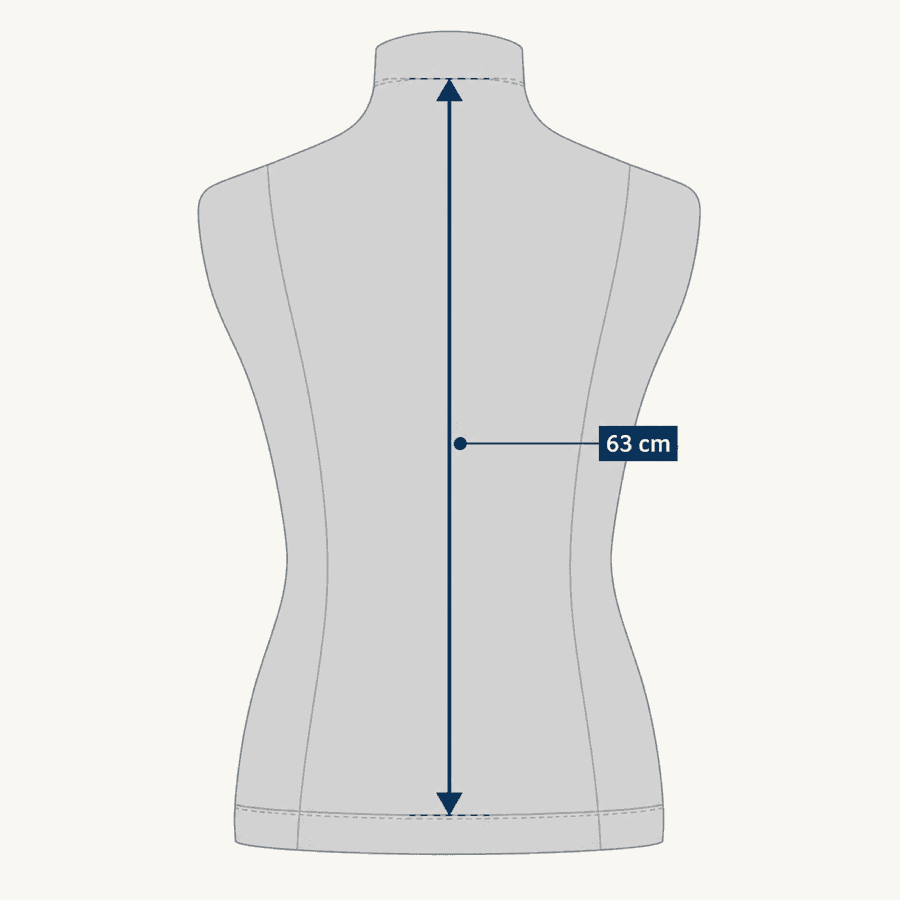
    Body length

    How to measure your body length

    Back neck bone straight down

  • 07

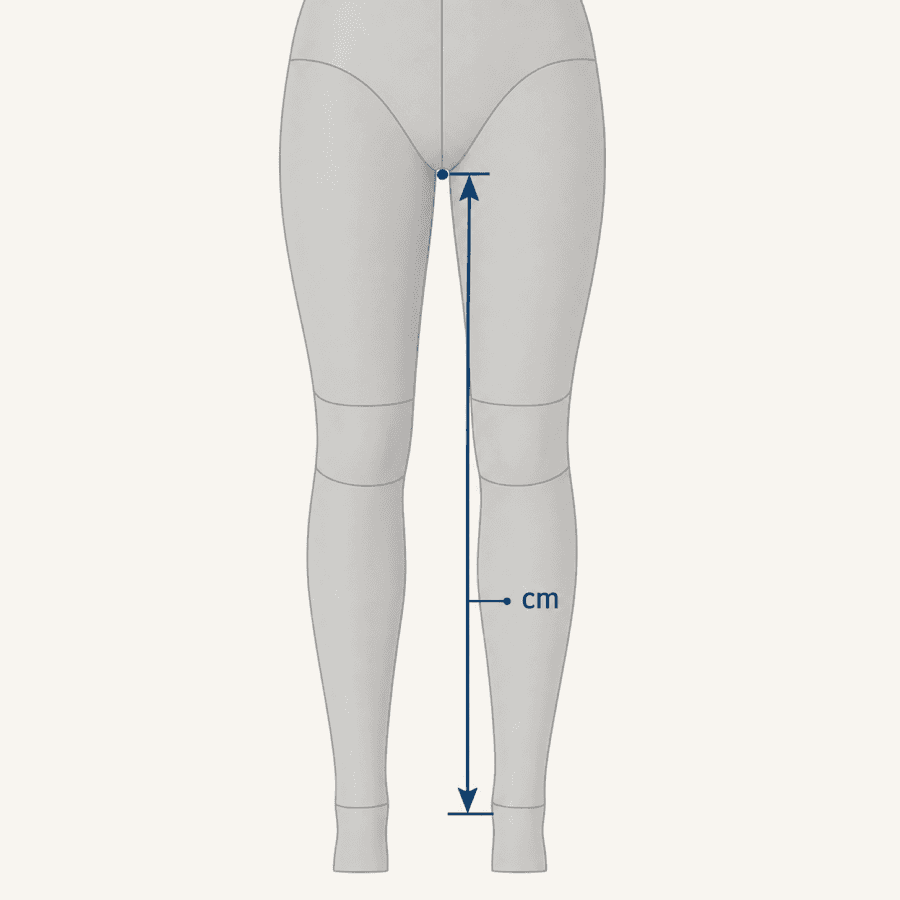
    Inseam

    How to measure your inseam

    Crotch point to ankle, inside the leg

Put your numbers into Block Compare

What you are entitled to

Three years to report a fault

You can report a fault for three years from delivery. For the first two years, if something is wrong, we have to show it wasn't faulty when you got it. Not the other way round.

Faults and complaints

Fourteen days to change your mind

You have 14 days from the day after delivery to withdraw from your purchase, without giving a reason. Everything we sell is outerwear, so the sealed-goods exception does not apply here — trying a garment on is never a reason for us to refuse a return.

Right of withdrawal

A free route if we say no

If we say no to your claim and you disagree, you can take it to Allmänna reklamationsnämnden (ARN). It is free for you, and we will follow their recommendation.

About ARN

If it didn't fitIf it didn't fit, tell us which measurement was off. We'll say which block would have been closer, or that we don't have one. Fit feedback form. This is in addition to your 14-day right of withdrawal, not instead of it.

ShippingStandard shipping is free over 140 USD. Prices are in USD and include 25 % moms. Shipping and returns.